
What the Morning Knows
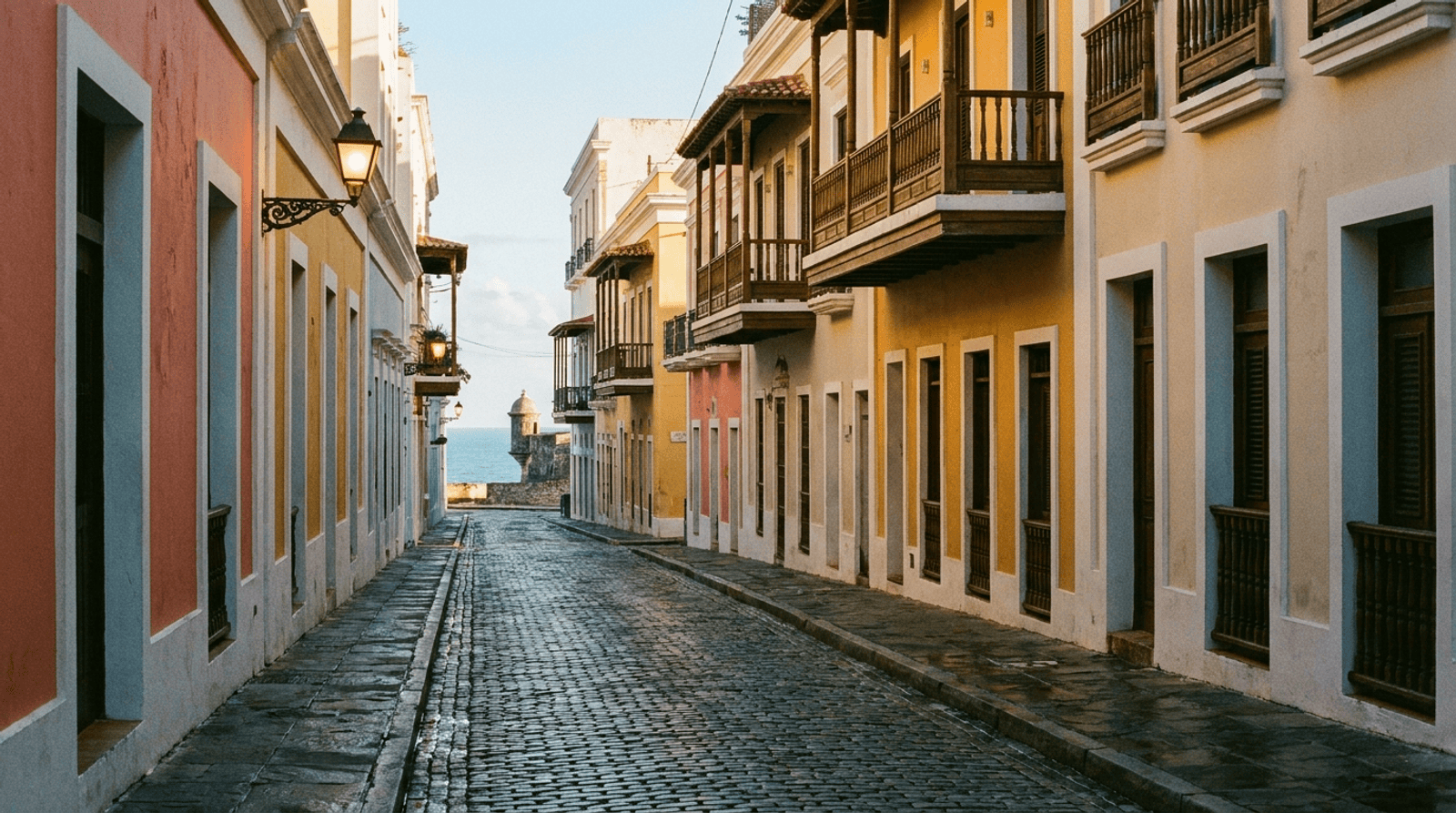
Every place has an hour when it tells you the truth about itself, and it is almost always the first one. Before the shutters go up and the day puts on its manners, a city moves the way it actually is — unhurried or brisk, talkative or shy. The traveler who sleeps through it can spend a week somewhere and never quite meet it. The one who rises early meets it on the first day.
We have come to think of mornings as the most honest form of sightseeing. Nothing is staged yet. The bakery is baking for the neighborhood, not for you. The man hosing down the plaza stones is not part of anyone's itinerary. Light arrives at its own angle, unbothered by golden-hour photographers, and the sounds that will later blur into background — a gate, a gull, an espresso machine clearing its throat — are still distinct enough to learn by name.
In San Juan, the morning is blue before it is gold. The old city's walls hold the night's cool for an hour or so, and the streets that will shimmer by noon are briefly, generously walkable. This is when the city belongs to bread and brooms: the smell of pan sobao drifting from doorways, shopkeepers sweeping their square of sidewalk with a ceremony that has nothing to do with dirt. If you carry your coffee to the wall above the water, you can watch the Atlantic decide what mood it will be in today. The forecast is written there earlier and more accurately than anywhere else.
Toronto's waterfront makes a different opening argument. The lake is glass at seven and grey silk by eight; rowers stitch across it like sentences being written and revised. The city wakes in layers — first the runners, then the dogs, then the strollers, then commerce — and if you sit still with something warm, you can watch each layer arrive and settle on the last. By the time the streetcars are full, you have seen a version of the city that the afternoon will spend all day covering up.
None of this requires discipline, which is the part we find people don't believe. Vacation mornings are not early the way work mornings are early. There is no alarm adrenaline, no inbox waiting at the end of the shower. You wake because the light is different and the bed is unfamiliar in the pleasant way, and the question of what to do next has exactly one good answer: go and see what the place does before it knows you're watching. An hour later you can return to bed, to breakfast, to the long shapeless middle of a day off. The morning does not ask for the whole day. It asks for the first slice, and repays it with the rest.
There is a design lesson in this, and we admit we've built around it. Windows placed for first light rather than for the postcard view. A kitchen where the coffee things live within arm's reach of the bed, because the distance between waking and the first cup determines whether a morning is used or spent. A chair that faces east. These are small decisions, invisible on a listing page, but they are the difference between a room you sleep in and a room that hands you the day.
So here is this month's suggestion, offered as gently as the hour itself: wherever you land next, spend one morning being early. Not productive — early. Take the first walk before the maps app has an opinion about where you're going. Let the place introduce itself before it has combed its hair. You will know things about it by eight o'clock that some visitors never learn, and the knowing will color every hour that follows.
The rest of the day can be as late as you like.
If you are inclined to practice, our doors face the right directions — Casa Monteflores, a hacienda penthouse above the blue-hour streets of Old San Juan, and Macchiato, our coffee-steeped apartment near the Toronto waterfront, where the lake writes its first drafts at dawn.